

The Khmer Connection
Cambodia's stolen treasures, a daughter's journey home, and the power of global connection

“The way we connect in the virtual world changes how we connect in the real one.”
I give a presentation on How to Engage on LinkedIn which ends with this line. In 2022, I delivered it alongside Srey Nich Vunn to the SHE-CAN community—scholars from Rwanda, Cambodia, Liberia, Guatemala and their mentors.
Today, my real-world connection with Nich exists because of this virtual one.
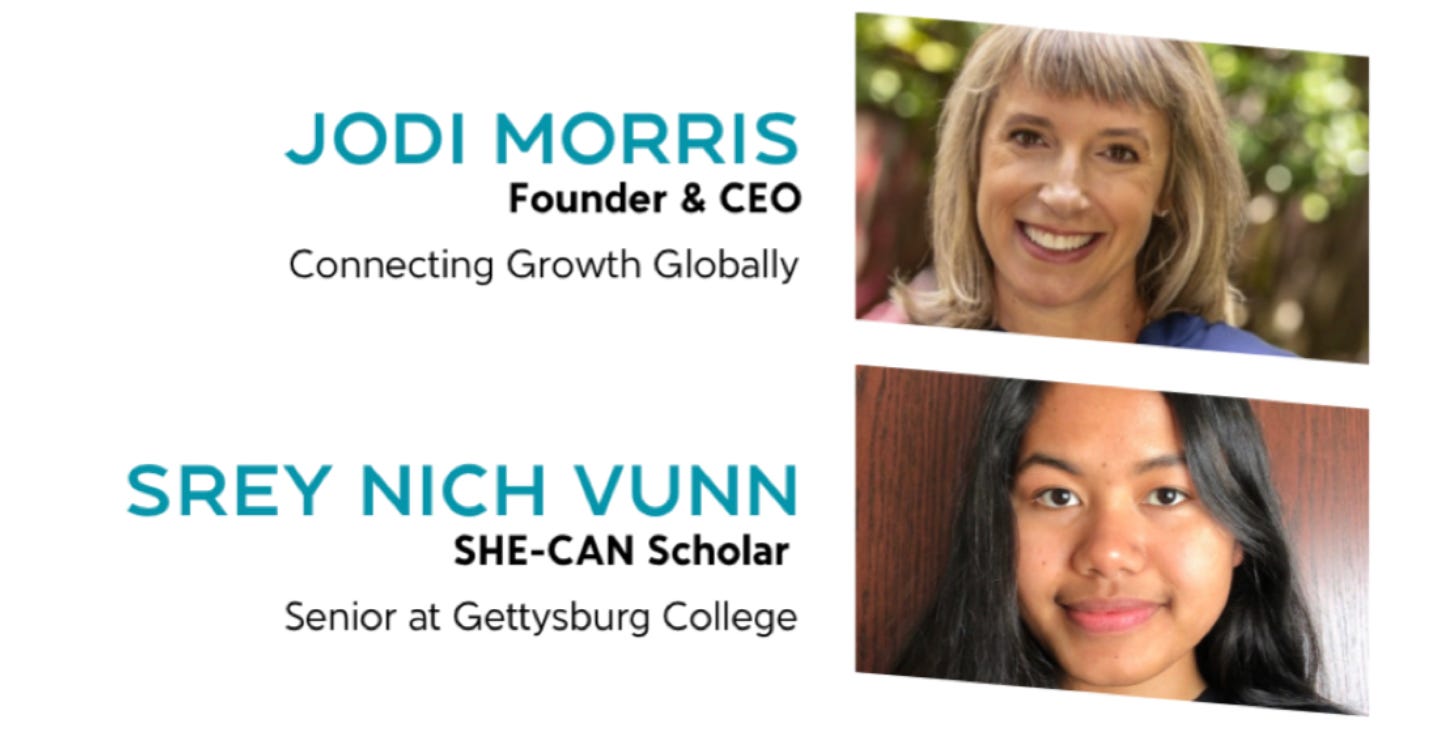
A SHE-CAN scholar from Cambodia, Nich graduated Magna Cum Laude from Gettysburg College with degrees in international affairs and economics. Along the way, she studied in Italy, volunteered as an educator in Namibia, and worked in the San Francisco and Washington, D.C. offices of a global law firm.
She’s a smart, thoughtful, curious-minded seeker—my favorite type of person.
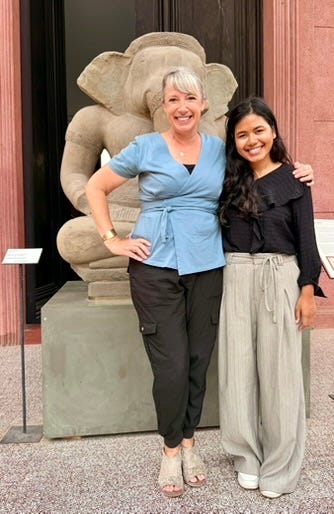
After seven years in the U.S., Nich returned to Cambodia in 2025 to work on the legal and antiquities repatriation team partnering with Cambodia’s Ministry of Culture & Fine Arts to bring centuries-old looted antiquities in museums and private collections around the world back to their rightful home.
It’s a big story—for Cambodia and other countries.
It’s a dream job for Nich. She’s proud of her Khmer heritage and is pursuing a career in public and international law. She grew up in a small community near Siem Reap’s Angkor Wat—the heart of the Khmer Empire from the 9th to 15th centuries.
As a girl, Nich learned family and neighbors’ stories from the Khmer Rouge genocide. Beginning in 1975, a radical communist group forced millions of Cambodians into labor camps; a quarter of the Cambodian population (two million people) were killed.
The stories shaped her sense of resilience and desire to pursue meaningful work.
“I developed a passion for social justice because of my upbringing. I grew up with survivors of the worst genocide. They taught me to appreciate everything given to me”
Nich is the daughter of a tour guide. Her father learned English as a young man by listening to Voice of America (VOA) radio.
VOA was Nich’s first English teacher, too. When we first met in person, I remarked that her accent seemed American. It all made sense.
It’s hard to imagine someone choosing to dismantle this gift to the world. I smile knowing people whose lives it changed.
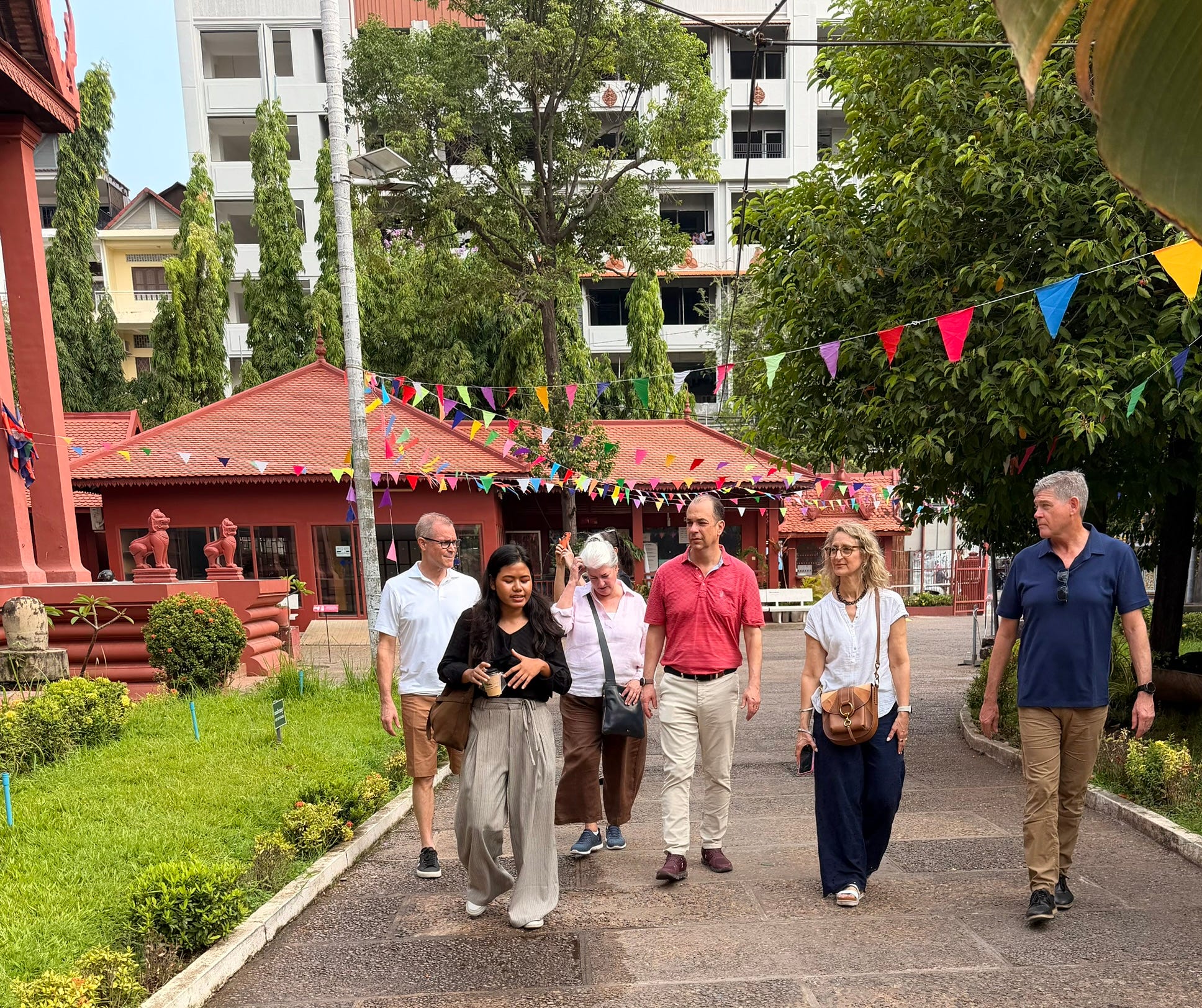
It’s Monday morning following the end of Cambodia’s extended Khmer New Year festivities, and the second full day of my small-group Venture Cambodia. I purposely planned our dates to touch the tail end of this national cultural celebration.
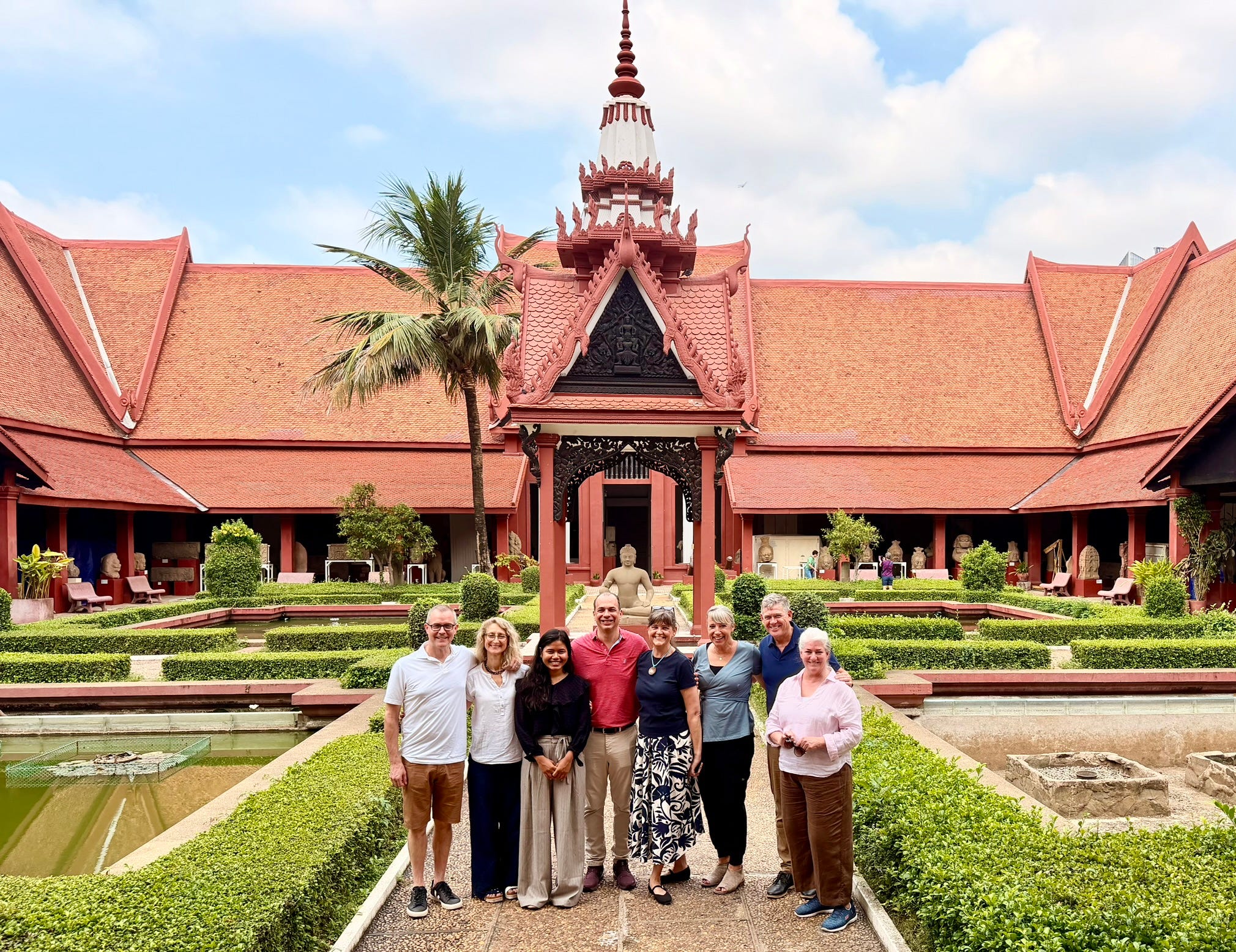
Nich meets us at the gate of the National Museum of Cambodia in the heart of central Phnom Penh. We purchase the first tickets of the day and step into a museum that feels it belongs only to us.
We introduce ourselves to Nich while walking through the gardens. Cultural treasures fill galleries, courtyards, and gardens. Together, they tell Cambodia's story.
Fortunately, we have Nich as narrator.
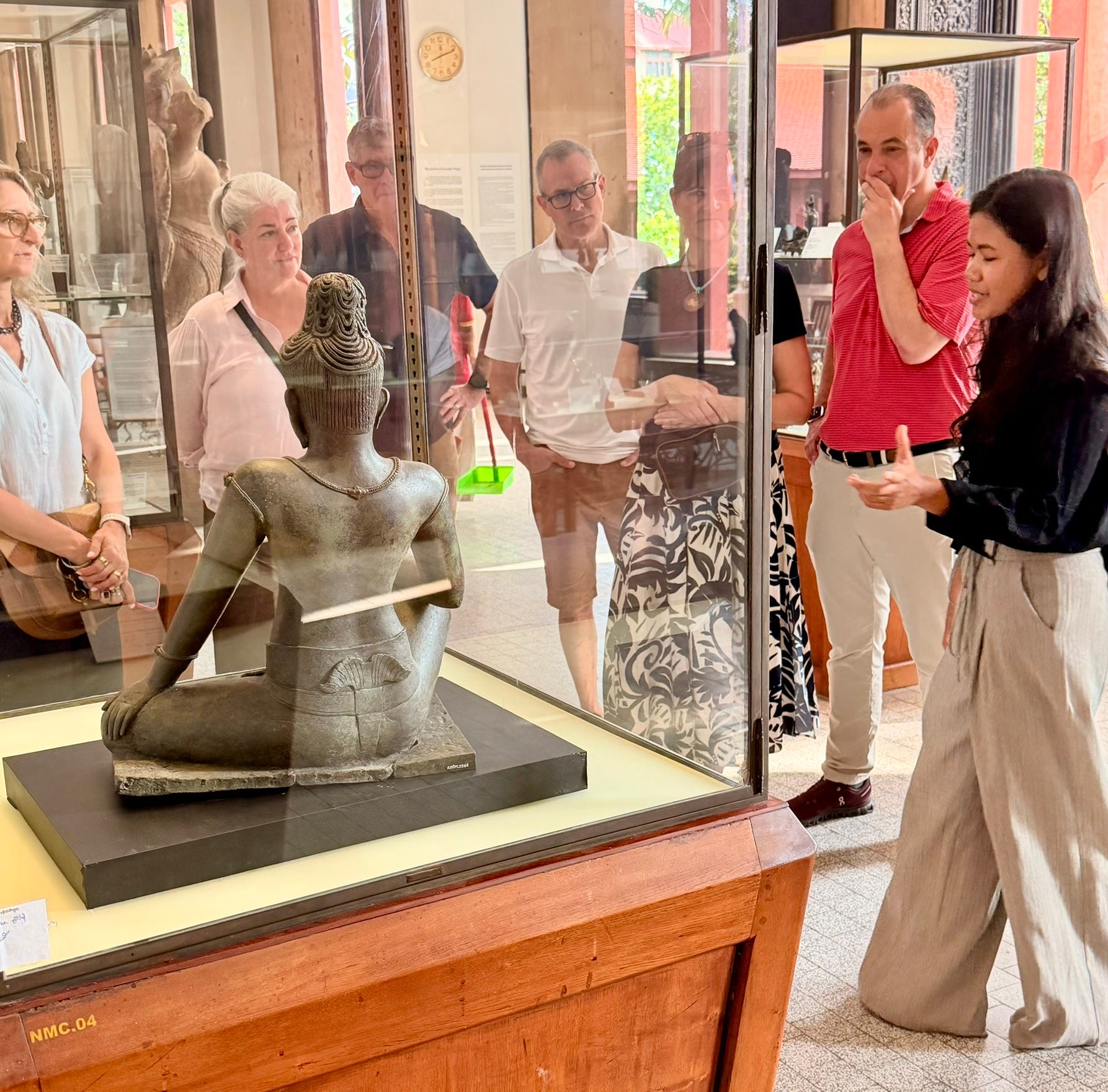
The theft of Cambodia’s antiquities—thousands of sacred stone, bronze and gold artifacts from religious sites across the country—might be the greatest art heist in history. In the 1970s, 80s and 90s Cambodia endured genocide, civil war, and political turmoil. Fueling it was a dirty secret.
British antiquities dealer Douglas Latchford was the key figure in a global trafficking operation. It involved hiring young looters who cut statues apart, smuggling pieces across the Thai border, creating false ownership histories and entering them into the world of auction houses, museums and private collections. Through it all, Latchford portrayed himself as a scholar and protector of Cambodia’s culture. He published books, and donated sculptures to the Metropolitan Museum of Art in New York—most of them stolen.
Nich stopped in front of a set of sculptures.
“This is the piece that changed everything.”
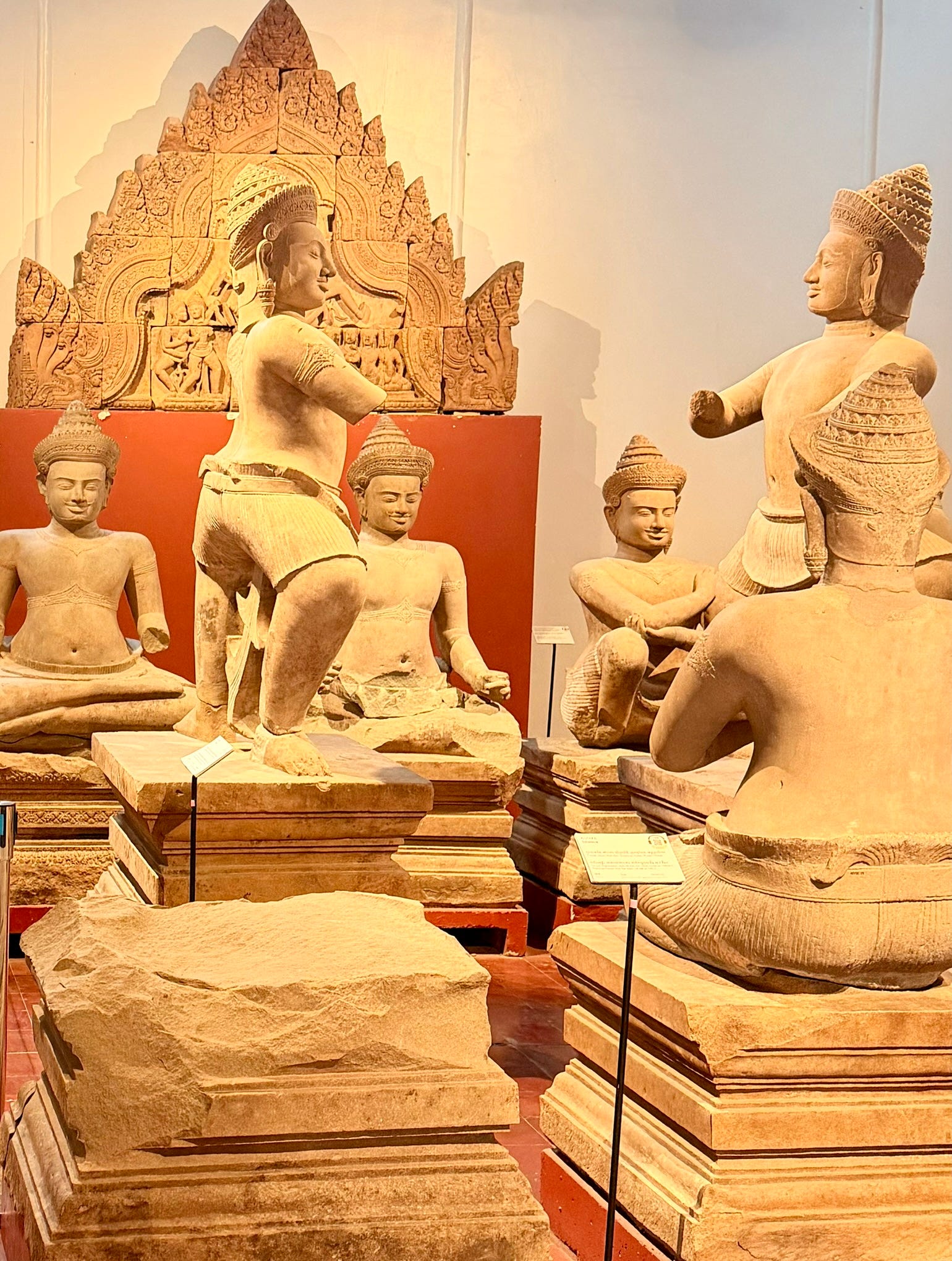
A 500-pound sandstone warrior Duryodhana was being prepared for auction at Sotheby’s in New York in 2011. Its feet were missing. Its price tag was $2-3 million.
A number of archaeologists recognized the statue as one whose feet were still attached to its pedestal at Cambodian temple Koh Ker. With hard evidence and years of pressure, Sotheby’s agreed to return it. Investigators traced its original sale to Douglas Latchford. He was indicted by U.S. authorities in 2019, but died before he could be put on trial.
Nich works for the legal team at Edenbridge Asia. Their client is Cambodia’s Ministry of Culture & Fine Arts. Led by Latchford's daughter, the family has agreed to return his personal collection of stolen treasures.
As we wander, Nich shares stories of Cambodia’s repatriation campaign.
Key are the former looters who testified. One confidential source was given the code name Lion. He remembered the size of everything, using his body as the measuring stick. At dozens of temples, he confessed what he'd stolen and how. He saw the statues’ repatriation as his redemption. He died of COVID in 2021.
We end at a 2009 plaque that honors museum benefactors who contributed to its electrical system and lighting. At the top of the list of honorees? Douglas Latchford. One of the disappointing names on the list, Nich says, is Emma Bunker. A prominent Asian art scholar from Colorado, her reputation was key to legitimizing a multi-decade smuggling operation.
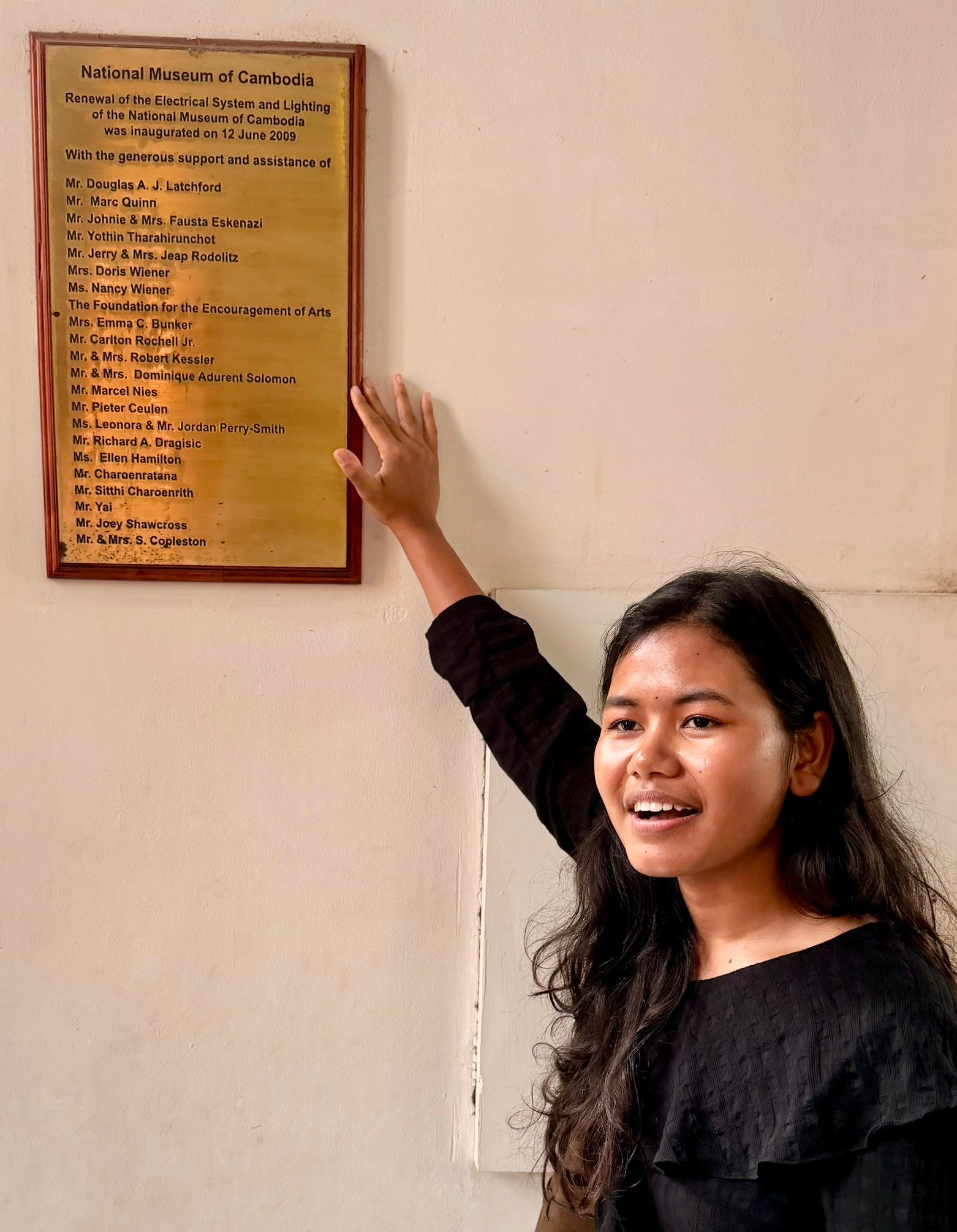
Two hours in, Nich has brought us into an ongoing story. Last month, another 74 Khmer artifacts linked to Latchford returned to Cambodia; last week, 20 artifacts were recovered from a private collection in Asia. Hundreds of pieces have so far been returned. But they’ve only just begun.
Pointing to a headless sculpture, someone asked Nich if she knew where it was located. She smiled. “Yes—the team is working on it. We hope to have him returned soon.”
We spoke about AI’s role in the reclamation process and the complexities of cross-border legal claims. We inquired about the use of sculptural replicas, which led to an insight we didn’t fully appreciate—for Cambodians, the statues are not just works of art but sacred deities that hold the souls of ancestors whose guidance and prayers they continue to seek.
Bringing the statues home is bringing family home.
There was one more surprise I had for the group.
As first-time visitors, everyone wished to visit Angkor Wat at our trip’s end. I happily agreed to organize a sunrise visit.
At 4:45am, we meet in the darkness of our hotel lobby. I pre-ordered coffee.
But that wasn’t the surprise.
As our guide for the day introduces himself, smiles spread across the group.
It was Savun Pok—Nich’s father.
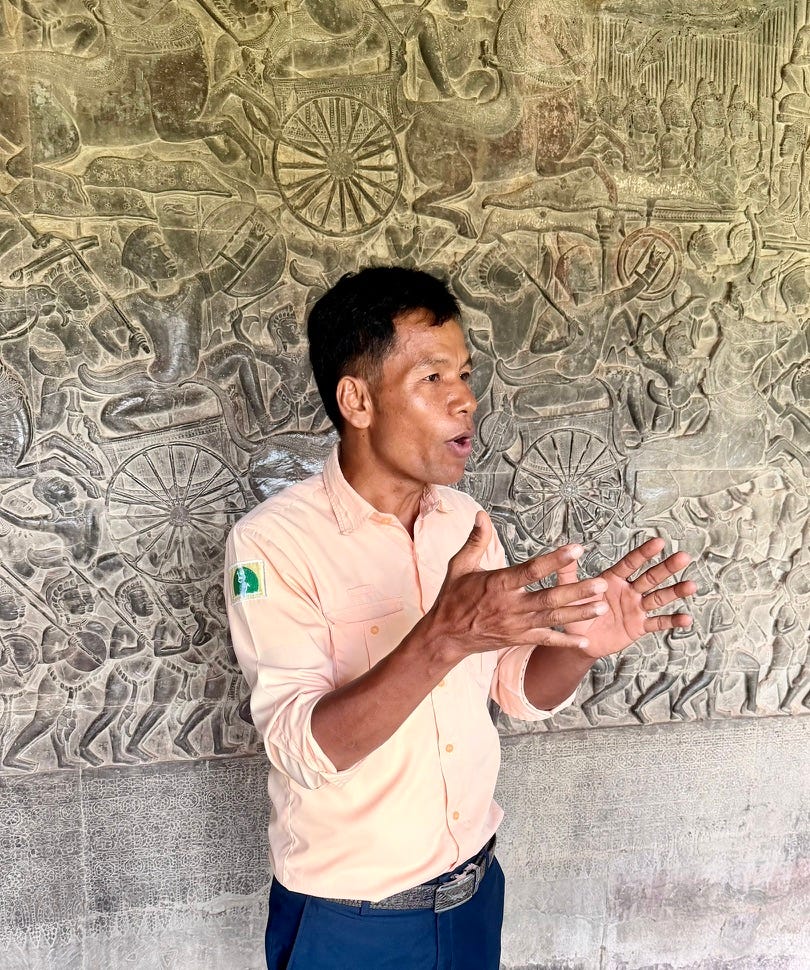
While watching the colors of the sky change behind Angkor Wat at dawn is magical, my favorite part was talking to Savun.
We were born the same year—1970. While I entered kindergarten, Pol Pot forces were overtaking Savun’s Siem Reap and transforming it into a grueling agrarian labor camp. While I watched the birth of MTV in the 1980s, Savun and his family navigated refugee camps, landmines, poverty and rebuilding.
While I went to university, Savun wisely invested in his own education. He knew speaking English would prove a vital skill. Voice of America (VOA) became his primary teacher.
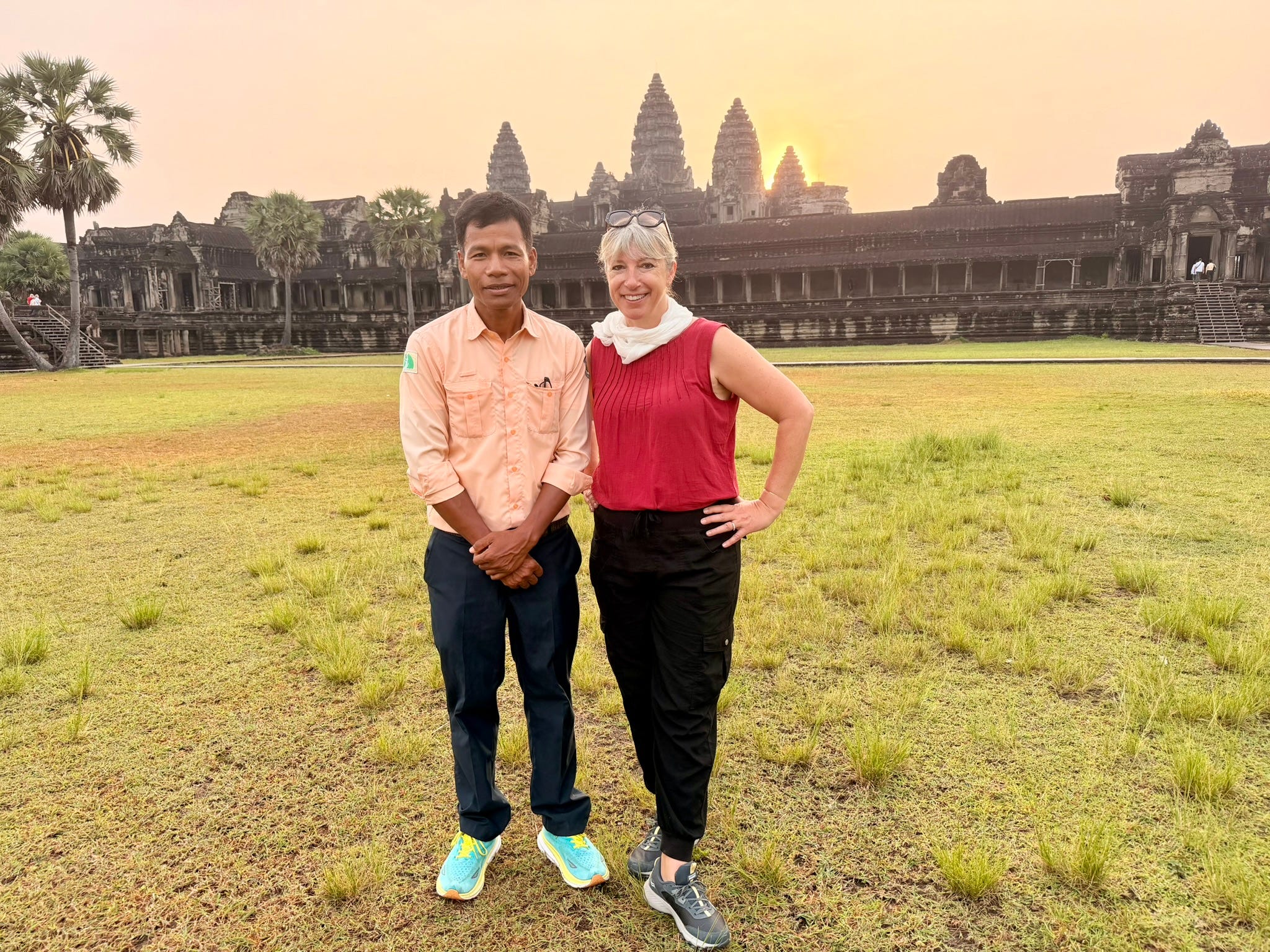
I asked Savun about Nich. What was she like as a child? Did she tour the temples with him? How is she different having returned from the U.S.?
Savun can’t help but smile speaking about Nich. As early as he could, he introduced his daughter to VOA. He couldn’t know exactly where it would lead—a job in tourism, maybe acceptance to university. He simply believed education created opportunity.
He told of the day she left Cambodia to fly to the U.S. He had never boarded a plane.
He shared the joys of celebrating Khmer New Year with her the other week. He doesn’t have words to describe how proud he is of the work she is doing today.
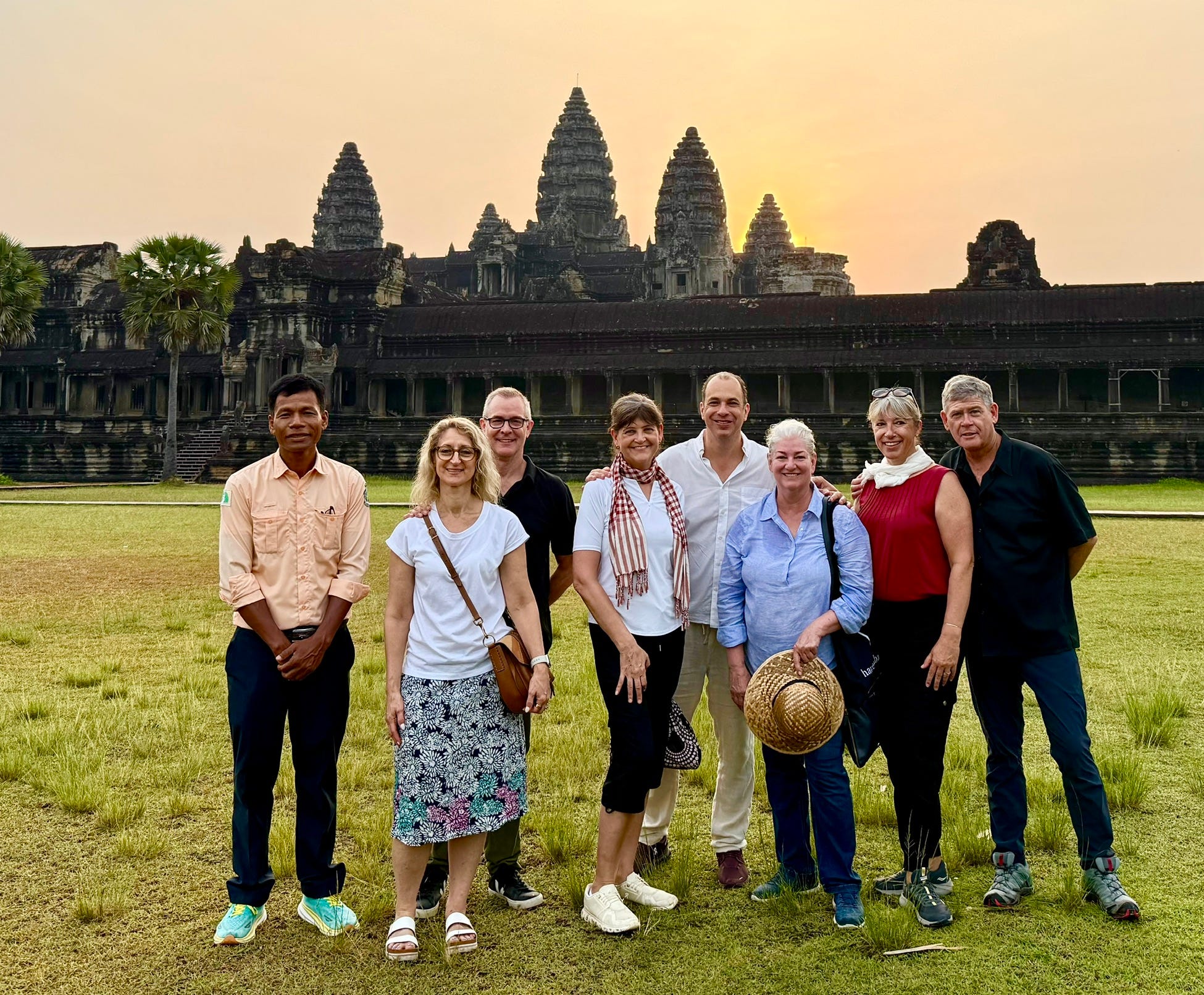
It’s a full circle moment. We see the impact of U.S. “soft power” diplomacy making a difference—to a family and a country. We see the importance of a dad who invests in his daughter as intensely as he would a son.
We see the real life impact of girls’ education. How resilience can come from atrocity.
To bring this to my fellow Americans and Cambodian friends means everything.
Standing with Savun at Angkor Wat, I’m reminded that anyone can travel. But connection requires curiosity. Listening. Time.
The statues are finding their way home.
Nich has found her way home.
So, in a sense, have we.
It’s the kind of story worth crossing the world to be part of.
Travel is about connecting—to ourselves and others. Join me on the next venture with Walking Mentorship on a one-week walk of the Camino de Santiago (Sep 18-26, 2026). Learn more at Venture Travel.